Why Scrap Metal Prices Affect What You Get for a Junk Car
By Twin Rivers Auto Recycling · 29 September 2026
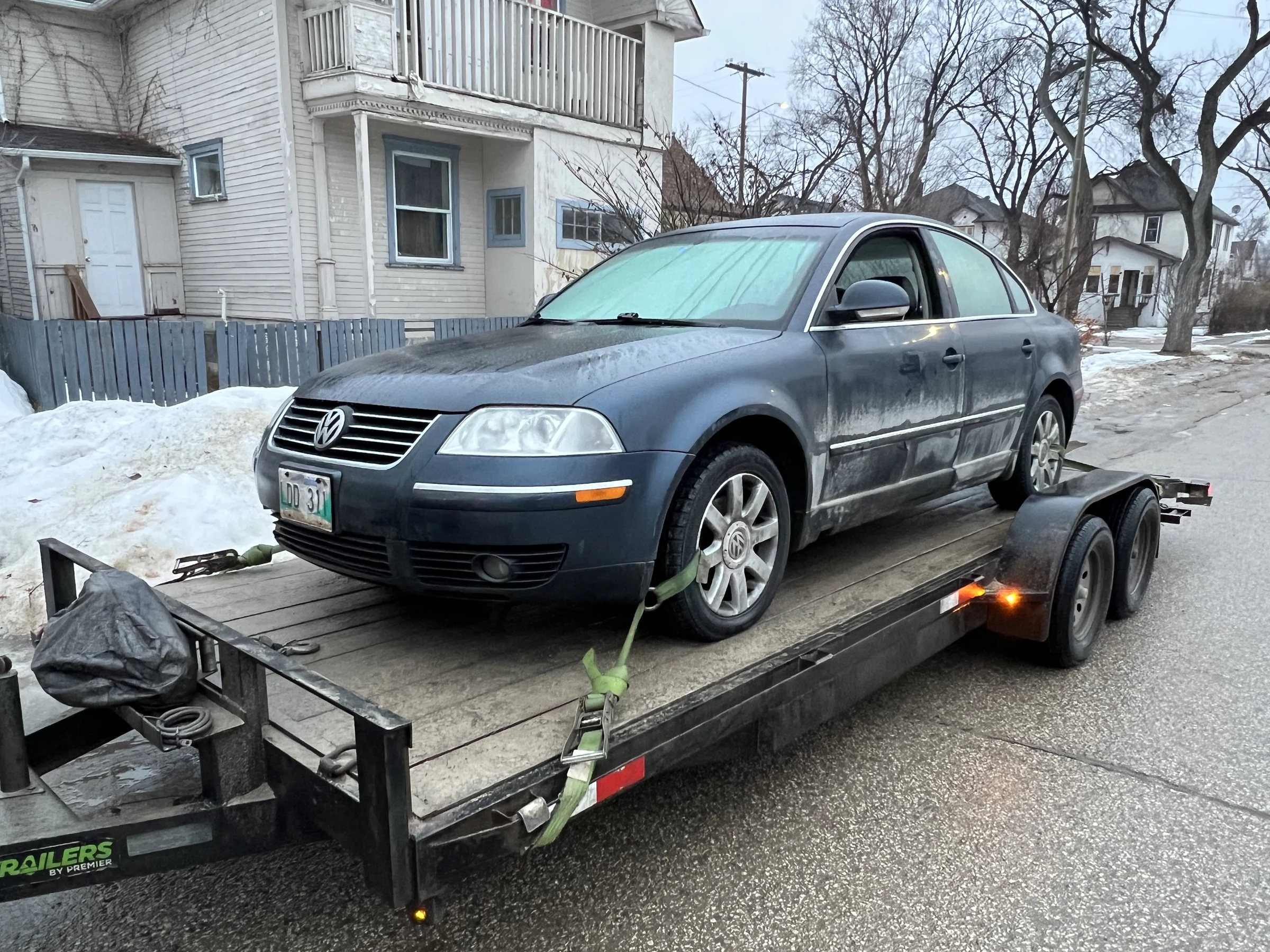
Scrap metal prices are one of the factors behind a junk-car offer, but they are not the only factor. A recycler looks at the vehicle’s recoverable metal, usable parts, weight, condition, paperwork, and the work involved in moving it. When metal values change, the amount a recycler can recover from the same vehicle changes too. That can affect what you are offered for a junk car in Niverville, Winnipeg, Steinbach, or elsewhere in southern Manitoba.
The final amount is based on the vehicle in front of the recycler and the details of the job. Understanding those details can help you compare quotes fairly and avoid assuming that a vehicle’s age or appearance tells the whole story.
What scrap metal prices have to do with a junk-car offer
A vehicle contains several types of metal, along with glass, plastics, fluids, wiring, and other materials. After a vehicle reaches the end of its useful life, some of its value comes from the material that can be recovered and processed.
When scrap markets are stronger, the recyclable metal from a vehicle may be worth more to the recycler. When those markets weaken, the same vehicle may produce less value after processing. This is why an offer can change over time even if the vehicle has been sitting in the same driveway or yard.
Scrap value is not a fixed price printed on the vehicle. It is part of a calculation that also includes labour, loading, transportation, processing, and whether usable components can be recovered.
Why two junk cars can receive different offers
Two vehicles that look similar from the road may have different values once their details are reviewed. Important differences can include:
- Vehicle size and weight: A larger vehicle may contain more recoverable metal, but its size can also affect loading and transportation.
- Condition: A vehicle that is complete may be handled differently from one that has already been stripped of important components.
- Parts potential: Some vehicles may have components that can be reused or resold, while others may be suitable mainly for recycling.
- Running status: A vehicle does not have to start to be considered, but a non-running vehicle can require different loading arrangements.
- Keys and access: Missing keys, seized wheels, rust, or limited access can change the work required to move the vehicle.
- Paperwork: Ownership documents and the vehicle’s history can affect whether the transaction can proceed.
For example, Twin Rivers Auto Recycling handles vehicles that are seized, blown, rusted to the frame, missing keys, or unable to roll. Those details should be shared before a quote is discussed so the TRA team can understand the actual job.
What can lower the amount you receive
Scrap metal value is only one part of the calculation. The amount may be affected when the recycler has to spend more time or equipment preparing the vehicle for transport or processing.
Common details that may matter include:
- The vehicle is missing major parts or has already been dismantled.
- The car is in a narrow area, behind another vehicle, or on ground that makes loading difficult.
- The vehicle cannot roll and needs additional handling.
- The address, road conditions, or loading space require extra planning.
- Ownership or other paperwork needs to be clarified before the vehicle can be accepted.
This does not mean a difficult vehicle has no value. Twin Rivers Auto Recycling accepts non-running and no-key vehicles, and missing paperwork is often something that can be addressed. The useful step is to explain the situation accurately rather than leave out details that could change the quote.
How to get a more useful junk-car quote
A clear description helps the TRA team assess the vehicle and the pickup conditions. Before contacting a recycler, gather the following information:
- The year, make, model, and approximate location of the vehicle.
- Whether it runs, rolls, or is seized in place.
- Whether the keys are available.
- Whether the vehicle is complete or missing parts.
- Whether ownership paperwork is available.
- How the vehicle can be reached by a tow or loading vehicle.
Photos can also help show the vehicle’s condition and the space around it. If you are clearing more than one vehicle, a fleet, commercial yard, or farm site, describe the whole job. Twin Rivers Auto Recycling buys work trucks, vans, multi-unit lots, farm equipment, and implements, with the quote based on what is present and where it sits.
Scrap prices are not the only thing to compare
It is sensible to ask how an offer was reached, especially when metal prices are changing. However, the highest-looking number is not necessarily the most useful comparison if it does not reflect the actual condition or access situation.
When comparing options, ask:
- Does the offer account for the vehicle being non-running or missing keys?
- Has the recycler been told about access, loading space, and paperwork?
- Is the amount based on the specific vehicle rather than a general advertised figure?
- What needs to be ready before the vehicle is removed?
Twin Rivers Auto Recycling provides free pickup on most vehicles. The TRA team serves Niverville and nearby communities including Steinbach, Île-des-Chênes, Landmark, St. Adolphe, Ste. Agathe, Morris, St. Malo, La Broquerie, and St-Pierre-Jolys. Pickup service also extends to Winnipeg, Morden, Winkler, La Salle, Stonewall, Selkirk, Beausejour, Oakbank, Headingley, Lowe Farm, Lac du Bonnet, and Portage la Prairie, subject to the vehicle and site details.
Ask Twin Rivers Auto Recycling about your vehicle
If you have a junk car taking up space, provide the vehicle details, its condition, and the address when you contact Twin Rivers Auto Recycling. That gives the TRA team a better basis for discussing its recyclable value and the practical work involved.
Call 431-444-CARS (2277) to request a pickup quote in Niverville or the surrounding service area. Running or not, keys or no keys, explain what you have and ask what information is needed next.