What to Expect When Your Vehicle Is Buried in the Yard
By Twin Rivers Auto Recycling · 16 September 2026
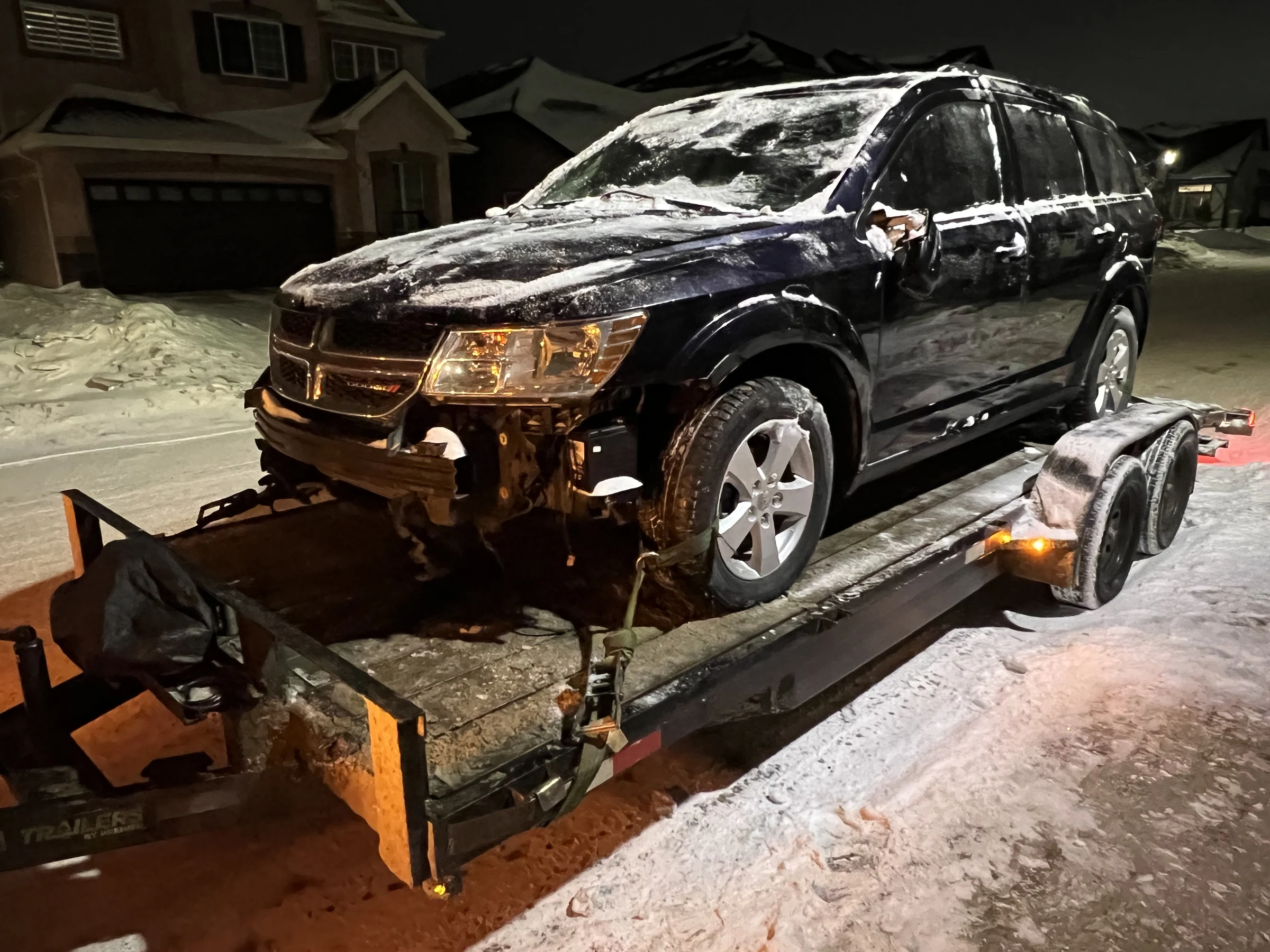
If an old car, truck, or piece of farm equipment is partly buried in a yard, the first step is not arranging a standard pickup. The TRA team will need clear details about how much of the vehicle is visible, whether it can be reached, and what space is available for loading. Twin Rivers Auto Recycling can review the situation and tell you what information is needed before a pickup is planned. Free pickup is available on most vehicles, but a buried vehicle may require extra site preparation before it can be safely accessed.
Why a buried vehicle needs a different plan
A vehicle that has settled into mud, snow, soil, brush, or a low area may not be treated like one sitting on a driveway. Even if the vehicle is no longer running, the loading approach still matters. The TRA team needs to understand the ground conditions and the route from the vehicle to the place where a truck can reach it.
Buried does not necessarily mean the vehicle cannot be recycled. Twin Rivers Auto Recycling handles non-running vehicles and vehicles with no keys, including vehicles that are seized, heavily rusted, or unable to roll. However, the vehicle must still be assessed based on its actual position and access.
Information to provide before asking for pickup
Clear information helps avoid surprises when the site is reviewed. When contacting Twin Rivers Auto Recycling, explain the situation plainly rather than describing the vehicle as simply “in the yard.” Useful details include:
- How much of the vehicle is above ground and whether the wheels are visible.
- Whether it is buried in soil, frozen ground, mud, snow, brush, or another material.
- Whether the vehicle has been moved recently or has been in the same position for years.
- Whether the doors, hood, or trunk can open.
- Whether keys, ownership paperwork, or both are available.
- How close a truck can get to the property and to the vehicle.
- Whether there is a narrow gate, ditch, fence, steep approach, soft ground, or overhead obstruction.
Photos are particularly helpful. Take wide photos showing the property and approach, along with closer photos showing the vehicle and the material around it. A map pin or precise directions can also help the TRA team understand the property.
Be prepared for questions about access and ground conditions
The most important question is usually not whether the vehicle starts. It is whether the vehicle can be reached and loaded without creating a dangerous or unsuitable situation. Tell the team what the ground is like now, not only what it is like during dry summer weather.
For example, a vehicle near the edge of a field may be easier to reach than one behind a fence or in a wet low spot. A vehicle in a treeline may have branches or uneven ground around it. A car that appears close to the driveway may still be difficult to approach if the route is too narrow for loading equipment.
Do not assume that a vehicle can be pulled out simply because another vehicle can reach the yard. The loading plan depends on the exact property, the vehicle’s position, and current conditions. If access is unclear, send photos before making arrangements.
Who handles digging or clearing the vehicle?
Ask this question before the pickup is confirmed: does the vehicle need to be uncovered or moved into an accessible position first? A buried vehicle may need soil, brush, snow, or other material cleared away before loading is possible. The property owner may need to arrange that work separately, depending on the site.
Do not begin digging around an old vehicle without considering buried hazards, unstable ground, sharp metal, glass, or fluids. If the vehicle has been in the ground for a long time, its condition may be worse than it appears from above. Keep people and equipment away from areas that could collapse or shift.
If the vehicle is on a farm or rural property, describe the surrounding area carefully. Twin Rivers Auto Recycling also works with farm equipment and implements that have been sitting in a treeline or elsewhere on a property. Tell the TRA team what is there and roughly where it sits so the request can be reviewed properly.
Paperwork, keys, and vehicle condition
A buried vehicle may also be missing its keys or ownership document because it has been sitting for years. Those details should be mentioned at the beginning. Twin Rivers Auto Recycling accepts requests involving missing paperwork, and a lost ownership document is not automatically a reason to abandon the conversation. Ask what is required for your situation before assuming the vehicle is stuck on the property permanently.
Keys are not always available for old vehicles. The vehicle may also be rusted, seized, or unable to roll. Those conditions are important, but they are separate from the access question. A vehicle can be accepted as non-running and still need to be uncovered or made reachable before it can be loaded.
How the local pickup review works
Start by sharing the property address, the vehicle’s location on the property, photos, and any access concerns. The TRA team can then review the request in the context of the route and site conditions. This applies whether the vehicle is in Niverville, Steinbach, Winnipeg, or a rural community such as Morris, Oakbank, or St. Malo.
For larger clear-outs, mention every vehicle, truck, van, implement, or piece of equipment on the property. Fleet and commercial jobs can be reviewed as a group, which may make more sense than describing only one buried vehicle. Be straightforward about whether the property is ready for access or whether clearing work is still needed.
Contact Twin Rivers Auto Recycling about a buried vehicle
If an old vehicle has become part of the yard, do not leave it there simply because it does not run, has no keys, or is partly covered. Contact Twin Rivers Auto Recycling with the address, photos, ground conditions, and a description of the access route. The TRA team serves Niverville and communities across southern Manitoba, including La Broquerie, St-Pierre-Jolys, Morden, Winkler, Selkirk, and Portage la Prairie.
Call 431-444-CARS (2277) and explain that the vehicle is buried or difficult to access. The more complete the site details are, the easier it is to determine what needs to happen before pickup can be arranged.