What Happens to Scrap Steel from Manitoba’s Prairies?
By Twin Rivers Auto Recycling · 17 September 2026
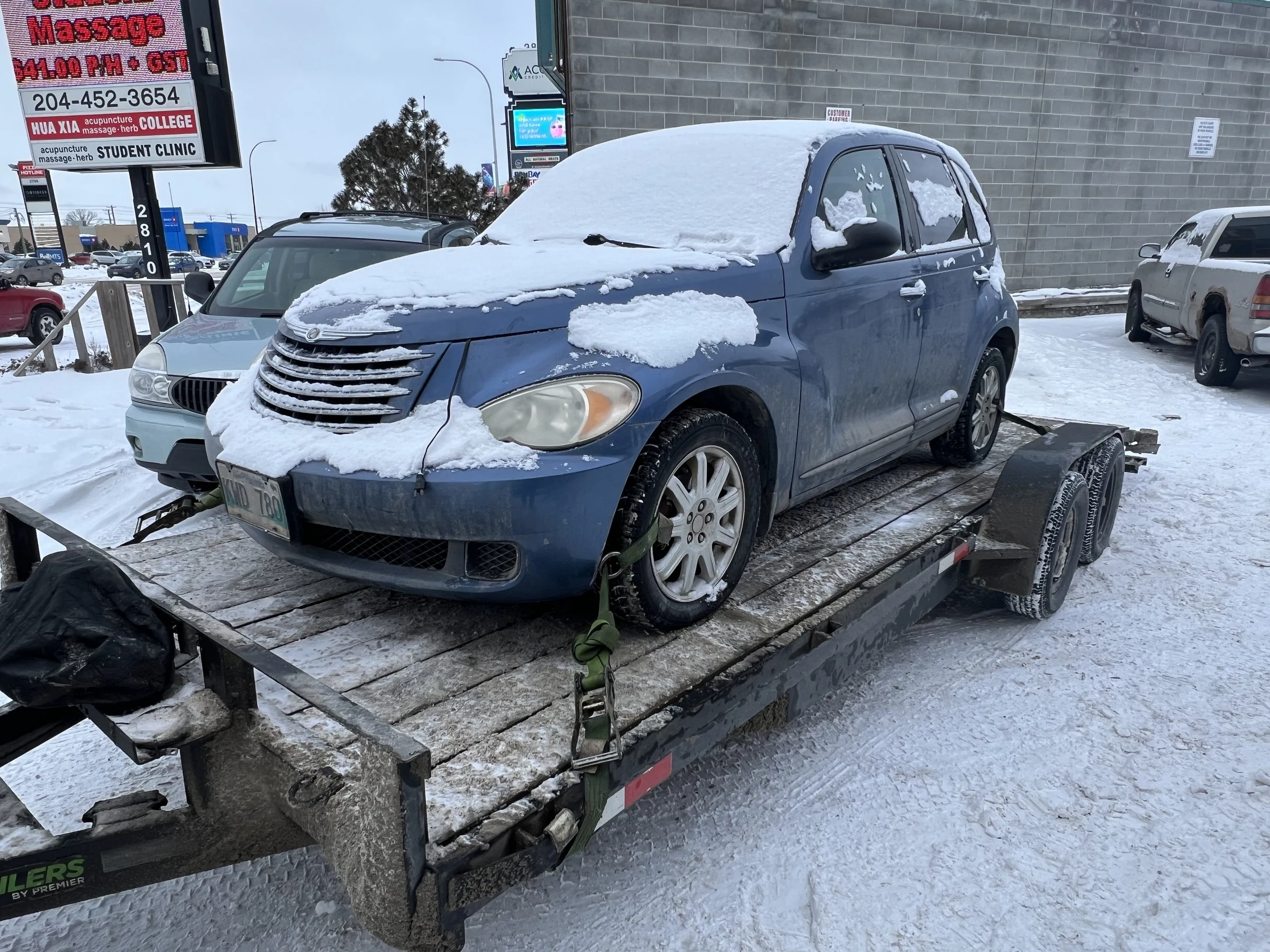
Scrap steel from Manitoba’s Prairies does not simply disappear when an old vehicle, truck, or piece of farm equipment leaves a property. It is collected, assessed, separated from other materials, and prepared for the next stage of recycling. The exact process depends on the item’s condition, its materials, and the recycling facilities involved.
For vehicle owners, the first step is choosing a practical way to remove the unwanted metal. Twin Rivers Auto Recycling buys end-of-life vehicles across southern Manitoba, including Niverville, Steinbach, Winnipeg, the Pembina Valley, and surrounding rural communities. The TRA team offers free pickup on most vehicles, including vehicles that do not run or no longer have their keys.
Where prairie scrap steel comes from
Much of the scrap steel handled through vehicle recycling comes from cars, trucks, vans, and work vehicles that have reached the end of their useful service. Some have collision damage, serious rust, seized parts, or mechanical problems. Others have sat on a farm or rural property because moving them was difficult.
Scrap steel can also come from fleet clear-outs, commercial vehicles, farm machinery, and implements. A vehicle does not have to start to be considered. It may not even need to roll. The TRA team works with owners who have vehicles that are seized, blown, rusted to the frame, or missing the key they came with.
The first stage is assessment and pickup
Before scrap metal can be processed, someone needs to understand what is being collected and how it can be accessed. The pickup address, the type of vehicle or equipment, and the space available for loading all matter.
Useful details to provide include:
- The make, model, and approximate year of the vehicle or equipment
- Whether it runs, rolls, or is completely seized
- Whether the keys are available
- Where it is located on the property
- Whether a truck or loading equipment can reach it
- Whether there are several vehicles or machines to remove
This information helps the TRA team review the job before arranging a pickup. For a yard, farm, or business with multiple units, the whole group can be discussed at once rather than treating every vehicle as a separate request.
What happens to the vehicle’s materials
An end-of-life vehicle is more than a pile of steel. It may contain glass, rubber, plastic, wiring, fluids, tires, and other materials. The vehicle therefore needs to be handled as a collection of different materials rather than as one uniform object.
Steel is the main material of interest in many vehicles, but it is separated from other parts during the recycling process. After preparation, ferrous metal can move into the broader scrap-steel stream. Other materials follow their own handling routes where applicable. The precise equipment, processor, and end use are not the same for every load, so a specific final destination should not be assumed without asking.
The important point for an owner is that sending an unwanted vehicle to an auto recycler creates a path for its materials to be handled as recoverable commodities instead of leaving the vehicle to deteriorate on a property.
Why condition and paperwork still matter
Condition affects how a vehicle can be moved and loaded. A running vehicle is different from one that is buried in long grass, resting on flat tires, or rusted in place. That does not automatically make the vehicle unacceptable, but it does make accurate site information important.
Paperwork is another common concern. A lost ownership document is often why a vehicle sits for years. The TRA team notes that missing paperwork is usually something to ask about rather than assume is impossible. If ownership documents are missing, raise the issue before pickup planning is finalized.
For larger clear-outs, a list of the vehicles or equipment on site can make the conversation more useful. Fleet and commercial customers may have work trucks, vans, or multiple units. Farm owners may have machinery and implements that have been sitting in a treeline for years. Describe what is present and roughly where it sits.
How prairie locations affect the collection plan
Manitoba’s Prairie region includes small towns, rural properties, and larger urban areas. Access can look very different in Niverville than it does on a rural property near Lowe Farm, St. Malo, La Broquerie, or St-Pierre-Jolys. A pickup near Winnipeg may have different driveway and loading conditions from one near Morden, Winkler, or Portage la Prairie.
That is why the exact address and property access are useful when requesting a quote. The TRA team serves communities including:
- Niverville, Steinbach, Île-des-Chênes, St. Adolphe, and Landmark
- Winnipeg, La Salle, Headingley, and Oakbank
- Morris, Ste. Agathe, Lowe Farm, and St. Malo
- Morden, Winkler, and Portage la Prairie
- Selkirk, Stonewall, Beausejour, and Lac du Bonnet
These communities are part of a wider southern Manitoba service area. Route planning depends on the confirmed pickup address, site conditions, and the current workload, so it is better to provide clear details than to rely on a general distance estimate.
What to do with an unwanted vehicle or machine
- Confirm what needs to be removed and whether there are additional vehicles or machines on the property.
- Gather the ownership information you have. If paperwork is missing, ask about it rather than leaving the vehicle in place.
- Take clear photos of the vehicle and its surroundings if access is difficult.
- Describe whether it runs, rolls, has keys, or is seized.
- Contact Twin Rivers Auto Recycling to request a pickup quote and review the site details.
If you are in Niverville or another listed Manitoba service area, contact Twin Rivers Auto Recycling at 431-444-CARS (2277). Explain what is on the property, where it sits, and whether access is straightforward. The TRA team can then discuss the next step for the vehicle, fleet, or farm equipment, including free pickup on most vehicles.