Selling a Commercial Van or Work Truck for Scrap in Southern Manitoba
By Twin Rivers Auto Recycling · 14 October 2026 · 10 views
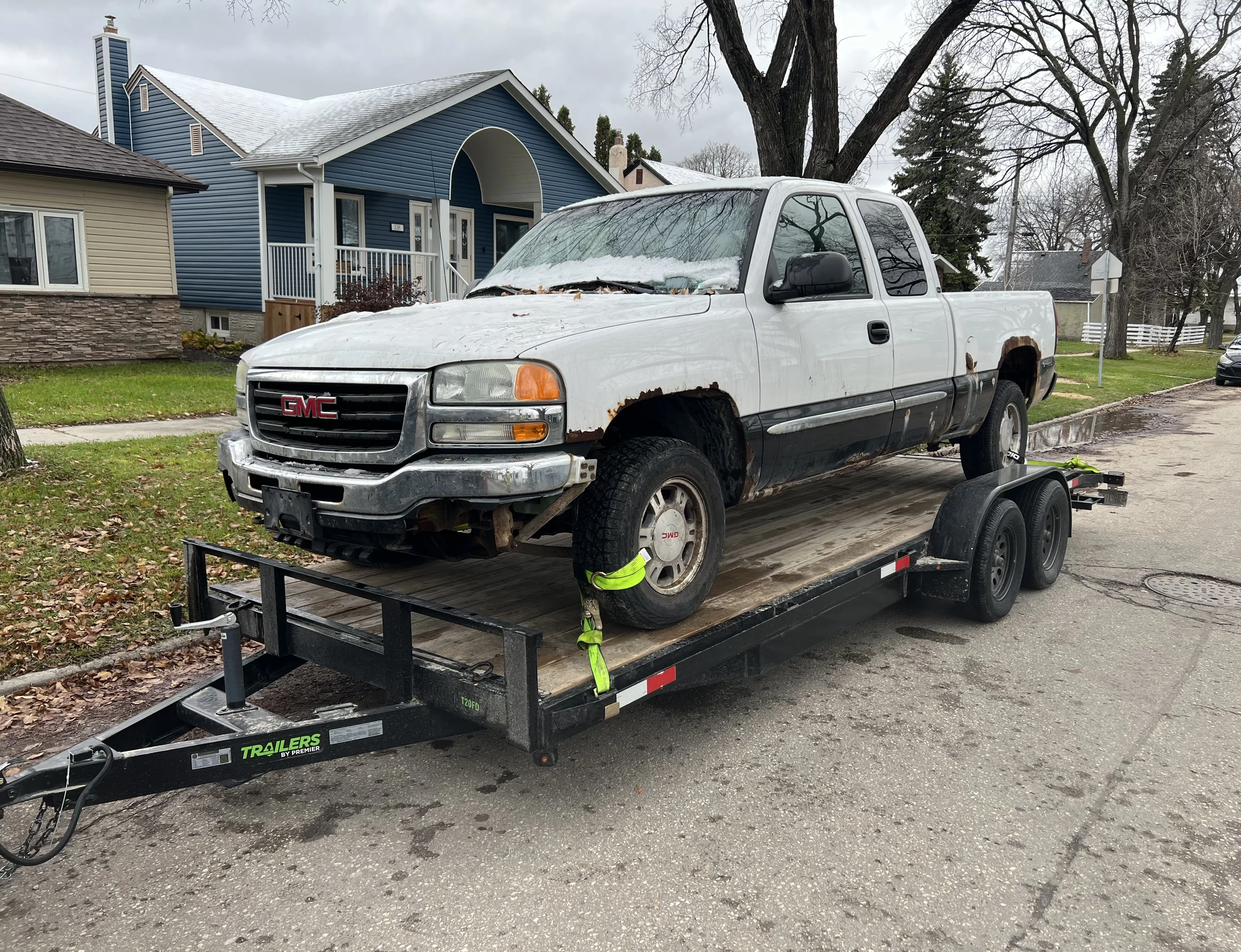
If your commercial van or work truck has reached the end of its useful life, you can still sell it for scrap even if it does not run, is missing its keys, or has been sitting on a work yard or farm property. Twin Rivers Auto Recycling buys individual vehicles and commercial lots, with free pickup on most vehicles. The TRA team can review the vehicle, its condition, and the pickup site before arranging the next step.
This guide explains what to prepare, what information affects the assessment, and how to arrange a practical pickup in Niverville, Winnipeg, Steinbach, and other southern Manitoba communities.
When a commercial vehicle is ready for scrap
A van or truck may be a good scrap candidate when repair costs, age, damage, or downtime make continued use impractical. Common examples include:
- A delivery van with major mechanical failure
- A work truck that has been damaged or heavily rusted
- A vehicle that no longer starts or move under its own power
- A fleet vehicle replaced by newer equipment
- A truck that has been parked because its keys or ownership documents are missing
The vehicle does not need to be roadworthy for the TRA team to consider it. Seized, blown, rusted-to-the-frame, and non-running vehicles can be discussed. If you are unsure whether the vehicle is worth arranging, ask first rather than continuing to store it.
What information to provide before pickup
A clear description helps Twin Rivers Auto Recycling understand the job and decide how the vehicle can be accessed. Have these details ready:
- Year, make, model, and body type
- Whether the van or truck starts, rolls, or is completely immobile
- Whether the keys are available
- Where the vehicle is located and how the site can be reached
- Whether it is parked on pavement, gravel, grass, inside a building, or in a tight yard
- How much room is available around the vehicle for loading
- Whether other vehicles or equipment are being cleared at the same time
Photos can also make the discussion more useful. Include the full vehicle, its wheels, the surrounding access area, and any damage or parts that are missing. For a commercial yard, a short list of the vehicles and their general locations can help the TRA team review the whole request.
Documents, keys, and non-running vehicles
Commercial vehicles are sometimes parked for years after paperwork is misplaced or keys disappear. Missing paperwork is a common reason a vehicle sits, but it does not necessarily mean the matter cannot be resolved. Ask Twin Rivers Auto Recycling about your specific situation before assuming the vehicle is stuck on the property.
Tell the TRA team if:
- The ownership document is unavailable
- The keys are missing
- The steering is locked
- The tires are flat or the wheels do not turn
- The vehicle is blocked in by other equipment
These details matter because a truck that does not start may still roll, while another vehicle may need a different loading approach. Honest information helps avoid an unsuitable arrangement on pickup day.
Preparing a fleet or commercial lot
If a business is replacing several vans or trucks, arranging them together can be more practical than dealing with each vehicle separately. Twin Rivers Auto Recycling handles fleet and commercial requests, including multi-unit lots. The TRA team can review the whole group at once and quote the lot as a package.
Before requesting a commercial pickup, make a simple inventory:
- List each vehicle and its approximate location.
- Mark which units run, roll, or are immobile.
- Separate vehicles with missing keys or paperwork.
- Remove business materials, tools, fuel containers, and personal property.
- Identify narrow entrances, overhead obstructions, soft ground, or other access concerns.
- Keep the loading area clear where possible.
Do not move a heavy or non-running truck into an unsafe position just to make it look more accessible. Describe the site as it is and let the pickup plan account for the conditions.
How location and access affect the pickup plan
The same type of truck can require a different plan depending on where it is parked. A vehicle in a clear commercial yard may be straightforward to approach, while one behind a building, in a field, or beside other equipment may need more review.
Twin Rivers Auto Recycling is based in Niverville and serves communities across southern Manitoba. Pickup requests may come from Steinbach, Île-des-Chênes, St. Adolphe, Landmark, Morris, Ste. Agathe, Lowe Farm, St. Malo, La Broquerie, and St-Pierre-Jolys. The service area also includes Winnipeg, La Salle, Headingley, and Portage la Prairie, as well as Morden and Winkler in the Pembina Valley.
The TRA team also reviews requests from Oakbank, Selkirk, Stonewall, Beausejour, Lac du Bonnet, and other listed service communities based on the exact address, access conditions, and current route. Provide a precise property location and explain whether the truck is on a public road, private yard, farm property, or commercial lot.
What happens when you contact Twin Rivers Auto Recycling
Start by sharing the vehicle details, condition, location, and access information. If you have several units, identify the whole lot rather than sending only one vehicle at a time. The TRA team can then discuss the request and the appropriate pickup arrangements.
Before the vehicle leaves, remove anything your business needs to keep, including tools, equipment, documents, decals, and personal belongings. Check storage compartments and the cargo area carefully. If the vehicle is part of a fleet, confirm which units are included in the request.
To ask about selling a commercial van, work truck, or fleet lot, contact Twin Rivers Auto Recycling at 431-444-CARS (2277). Include your Manitoba community, vehicle count, running condition, key and paperwork status, and site access. From the home base in Niverville to commercial properties around Winnipeg and southern Manitoba, the TRA team can review the details and help determine the next practical step.