Dead Pickup Truck: What to Know Before You Call
By Twin Rivers Auto Recycling · 25 September 2026
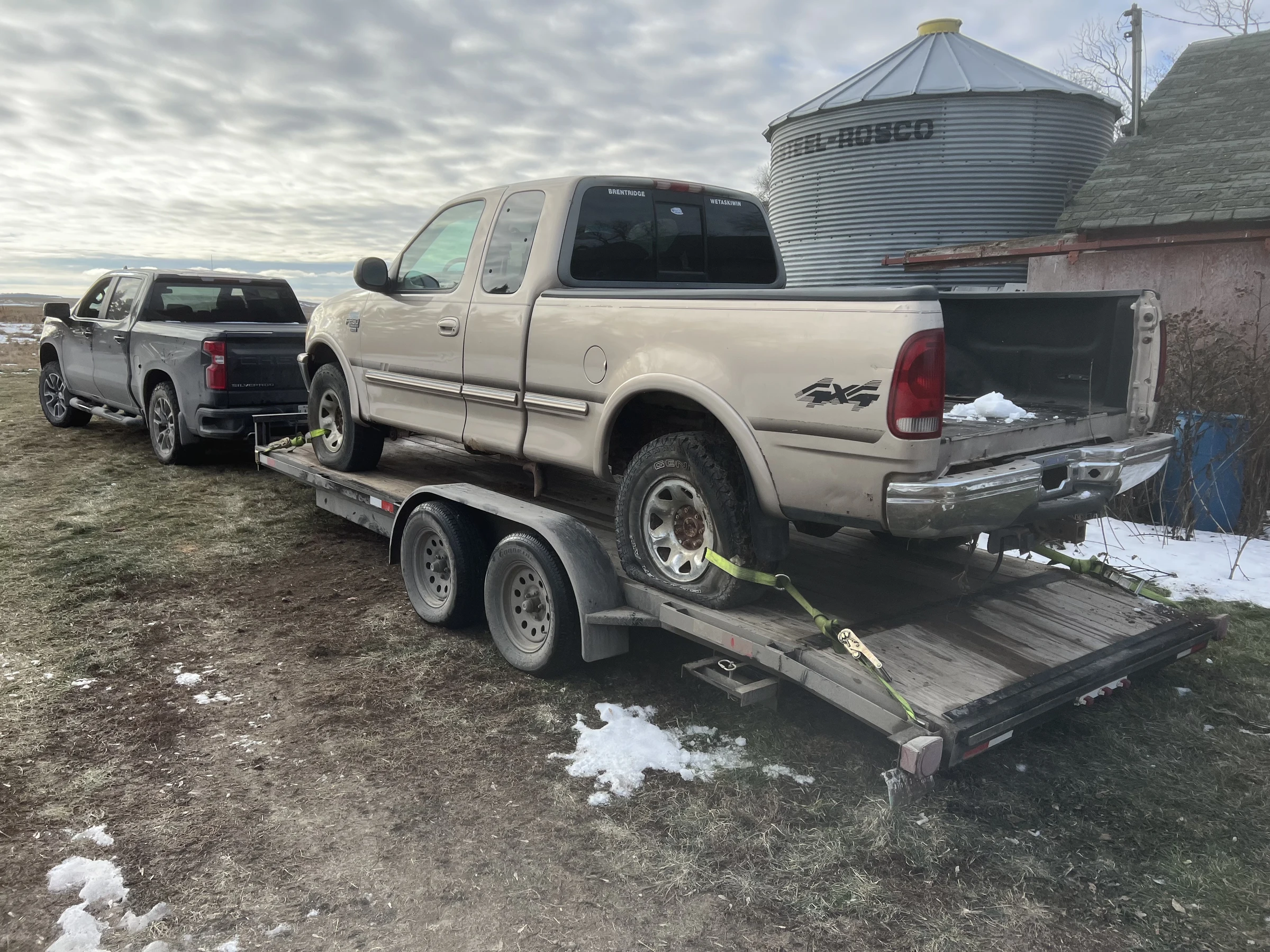
A dead pickup truck does not need to start, roll, or have its original key for Twin Rivers Auto Recycling to review it. Before you call, gather the truck’s location, condition, paperwork status, and access details. That information helps the TRA team understand what is involved and whether the pickup site is ready.
Twin Rivers Auto Recycling buys vehicles across southern Manitoba, including Niverville, Steinbach, Winnipeg, Morden, Winkler, and many surrounding communities. Free pickup on most vehicles is available. Here is what to know before asking about a dead pickup truck.
What “dead” means when you call
A dead pickup can mean several different things. It may have a flat battery, a failed engine, seized components, heavy rust, or no key. It may also be sitting in a place where it cannot move under its own power.
You do not need to diagnose the truck before contacting Twin Rivers Auto Recycling. A clear description is more useful than a guess about the exact mechanical problem. Tell the TRA team what you know, such as:
- Whether the engine starts or has not run for a long time
- Whether the pickup rolls, is seized, or is resting on flat or damaged tires
- Whether the key is available
- Whether the truck is complete or missing major parts
- Whether it is in a driveway, yard, farm area, storage lot, or another location
Twin Rivers Auto Recycling handles non-running and no-keys vehicles, including trucks that are seized, blown, rusted to the frame, or missing the key they came with. The pickup does not need to start, and it does not need to roll.
Check the truck’s paperwork
Ownership paperwork is worth checking before you call. A lost ownership document is a common reason a vehicle sits for years, but missing paperwork does not necessarily mean the truck is stuck permanently. Ask about the situation instead of assuming it cannot be handled.
If the paperwork is available, keep it nearby when you contact the TRA team. If it is missing, say so at the beginning. The team can then discuss what information is needed for the next step. Do not throw out documents, keys, or plates before you have described what you have.
Describe where the pickup is sitting
Location matters, especially when a truck cannot move. Give the exact property location and explain how the truck can be reached. A dead pickup may be easy to access in a driveway but more difficult if it is behind other vehicles, in a narrow yard, or on a rural property.
Before the call, look at the approach and loading area. Consider whether there is room to reach the truck and whether gates, parked vehicles, soft ground, snow, or other obstacles affect access. You do not need to prepare the entire property, but accurate details help the TRA team plan around the actual site conditions.
For rural pickups, a map pin or precise directions can be helpful. Twin Rivers Auto Recycling serves communities such as Île-des-Chênes, St. Adolphe, Landmark, Morris, Ste. Agathe, Lowe Farm, St. Malo, La Broquerie, and St-Pierre-Jolys. The route and site conditions still need to be reviewed for each pickup.
Do not try to make it run just for the call
If a pickup truck has been sitting for years, avoid spending money on repairs before deciding what to do with it. You do not need to get it running to ask Twin Rivers Auto Recycling about it. Describe its condition honestly instead.
It is also useful to mention hazards or unusual conditions at the property. For example, tell the team if the truck is partly buried, surrounded by scrap, blocked in, or located on uneven ground. These details are more important than making the vehicle sound better than it is.
What to have ready when you contact Twin Rivers Auto Recycling
A short list of details can make the conversation easier:
- Year, make, and model, if known
- The truck’s exact location
- Whether it runs, rolls, or is seized
- Whether the key is available
- Whether ownership paperwork is available
- Photos of the truck and its access route, if useful
- Any other vehicles, work trucks, or equipment at the same property
If you are clearing more than one vehicle, mention that during the first contact. Twin Rivers Auto Recycling also reviews fleet and commercial work, including work trucks, vans, and multi-unit lots. Farm equipment and implements can also be discussed when you explain what is there and roughly where it sits.
Pickup areas around southern Manitoba
Twin Rivers Auto Recycling is based in Niverville and serves a broad area. Pickup requests may include Winnipeg and west, the Pembina Valley, the southeast corridor, and communities east and north of Winnipeg.
Service areas include La Salle, Headingley, Portage la Prairie, Stonewall, Selkirk, Beausejour, Oakbank, Lac du Bonnet, and other listed communities. The exact address, loading space, route, and workload are reviewed before arrangements are made. This is particularly important for a truck that does not roll or sits far from a main access point.
How to start the conversation
When you are ready, contact Twin Rivers Auto Recycling with the truck’s condition, location, key status, and paperwork status. You can call 431-444-CARS (2277) to request a pickup quote.
If the dead pickup is in Niverville, Winnipeg, Steinbach, or another southern Manitoba service area, clear information at the start helps the TRA team review the request properly. Do not worry if the truck will not start or the key is gone—those are details to report, not reasons to leave the vehicle sitting indefinitely.