Catalytic Converter Theft and What It Means for a Scrap Vehicle
By Twin Rivers Auto Recycling · 6 October 2026
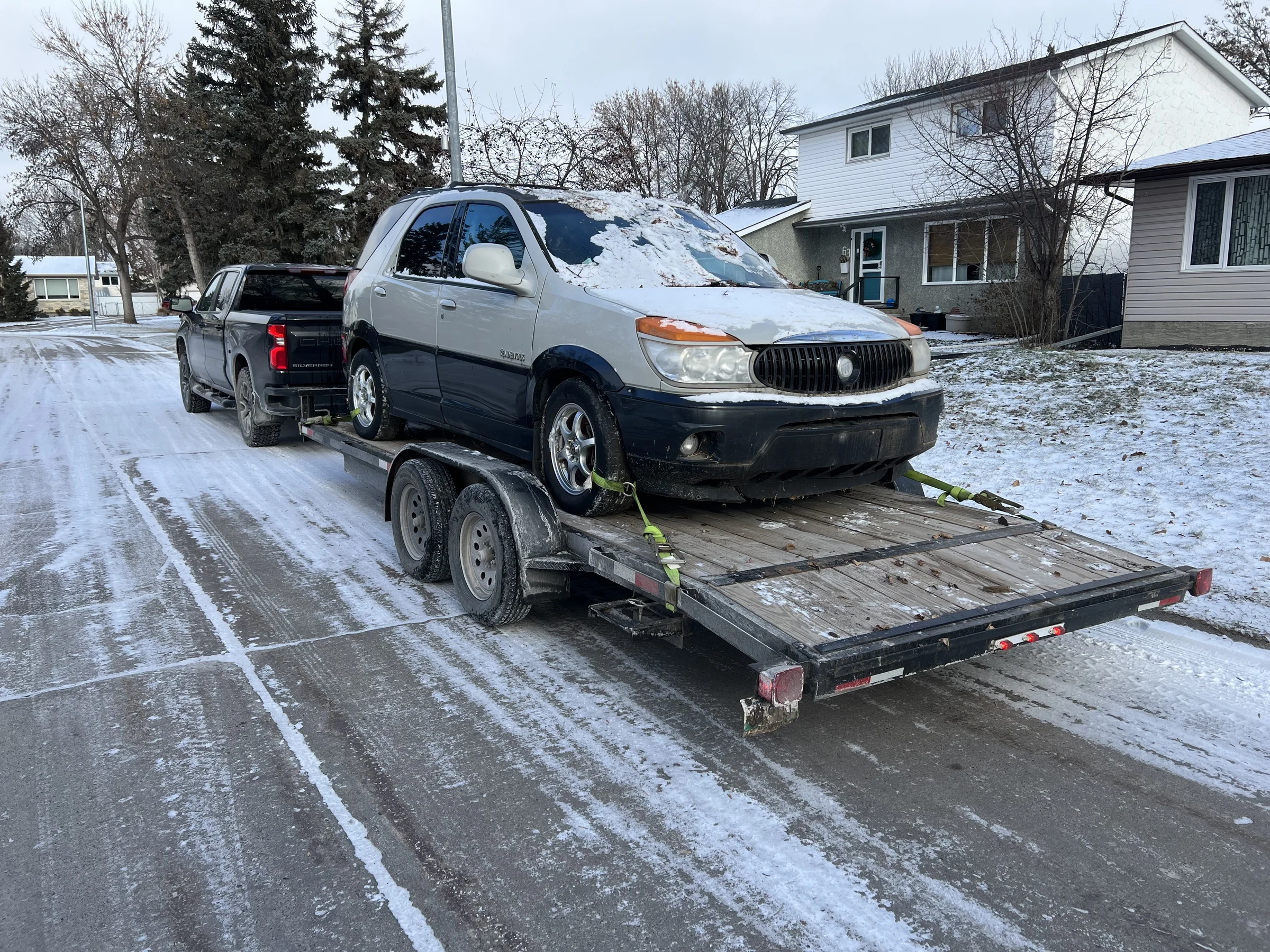
If a catalytic converter has been stolen, the vehicle may still have a place in the scrap vehicle market. The missing part will affect the vehicle’s condition and how it is assessed, but it does not automatically mean the car is worthless. Twin Rivers Auto Recycling reviews the vehicle as a whole, including its condition, access, ownership paperwork and whether it can be loaded safely.
This matters in southern Manitoba, where an older vehicle may already be sitting unused because it does not run, has no keys, or has been parked for years. A missing converter is one more detail to report when asking for a pickup quote.
Why catalytic converters are targeted
A catalytic converter is fitted into a vehicle’s exhaust system. It contains materials that can attract theft, so some parked vehicles are targeted while their owners are away. The result may not be obvious until the vehicle is started, moved or inspected.
Signs that a converter may be missing can include:
- A section of exhaust appears to have been cut away.
- The vehicle makes a much louder exhaust noise than before.
- There are fresh cuts, damaged pipes or loose exhaust components underneath.
- The vehicle was parked securely but now has visible underbody damage.
Do not crawl beneath an unstable vehicle to inspect it. If you suspect theft, document what you can safely see and contact the appropriate authorities or your insurer. The TRA team can then be told that the converter is missing when the vehicle is discussed for recycling.
How a missing converter changes the scrap vehicle assessment
A scrap vehicle is not valued from one part alone. The overall assessment can depend on the vehicle’s make, model, year, condition, completeness, ownership situation and the practical work needed to move it. A stolen converter is therefore an important condition detail, but it is not the only detail.
When contacting Twin Rivers Auto Recycling, be ready to explain:
- The vehicle’s year, make and model, if known.
- Whether it starts, rolls or is seized in place.
- Whether the keys are available.
- Whether the catalytic converter or another exhaust section is missing.
- Where the vehicle is located and how a truck could reach it.
- Whether ownership paperwork is available.
This information helps the TRA team understand what is being picked up before discussing the next step. It also prevents a mismatch between the vehicle described and the vehicle found at the property.
Can a vehicle with no converter still be picked up?
It may be possible to arrange recycling for a vehicle with a missing converter, depending on the vehicle’s condition and the site. Twin Rivers Auto Recycling handles non-running and no-key vehicles, including vehicles that are seized, rusted to the frame or unable to roll. A missing converter should simply be mentioned during the initial conversation.
Access is especially important when a vehicle cannot move under its own power. Tell the TRA team if it is:
- Parked in a tight driveway or behind another vehicle.
- On soft ground, in a yard or near a treeline.
- Blocked by snow, stored equipment or other vehicles.
- Missing wheels, difficult to reach or unable to roll.
Free pickup is available on most vehicles. The exact site details still matter because loading conditions can vary from one property to another.
What owners should do after a converter theft
If the vehicle is insured or might be repaired, take photographs before changing its condition. Keep any documents connected with the vehicle and note when the damage was found. If the vehicle is no longer worth repairing, ask about recycling rather than assuming the missing part makes it impossible to remove.
Do not try to recover a suspected stolen converter from another source or treat an unidentified part as yours. When arranging a vehicle pickup, be clear about which vehicle you own and where it is located. Missing paperwork is often the reason an old vehicle remains on a property, but it is usually worth asking what options are available before assuming the vehicle is stuck there permanently.
How the scrap vehicle market differs from selling a converter alone
A converter removed from a vehicle is a separate item from the vehicle itself. Selling or recycling the complete vehicle involves more than identifying one exhaust component. The vehicle still has a body, drivetrain, wheels, fluids, interior and other recyclable material, along with practical questions about access and transport.
That is why a quote request should describe the complete vehicle rather than focusing only on the missing part. The TRA team can review whether the vehicle is running, whether it has keys, whether paperwork is available and whether it is part of a larger cleanup. Twin Rivers Auto Recycling also works with fleet and commercial clear-outs, farm equipment and multi-vehicle lots.
Arranging pickup in southern Manitoba
Twin Rivers Auto Recycling is based in Niverville and buys vehicles across southern Manitoba. Pickup discussions can include Niverville, Steinbach, Île-des-Chênes, St. Adolphe, Landmark, Winnipeg, Morden, Morris, Oakbank, Selkirk, Winkler, La Salle, Stonewall, Beausejour, Ste. Agathe, Lowe Farm, Headingley, St. Malo, La Broquerie, St-Pierre-Jolys, Lac du Bonnet and Portage la Prairie.
When you call, mention that the catalytic converter is missing and provide the vehicle details, ownership situation and access information. For a local assessment, contact Twin Rivers Auto Recycling at 431-444-CARS (2277). The TRA team can explain what information is needed for a pickup quote and whether the vehicle appears suitable for collection.