Catalytic Converter Theft and the Scrap Vehicle Market in Manitoba
By Twin Rivers Auto Recycling · 20 October 2026
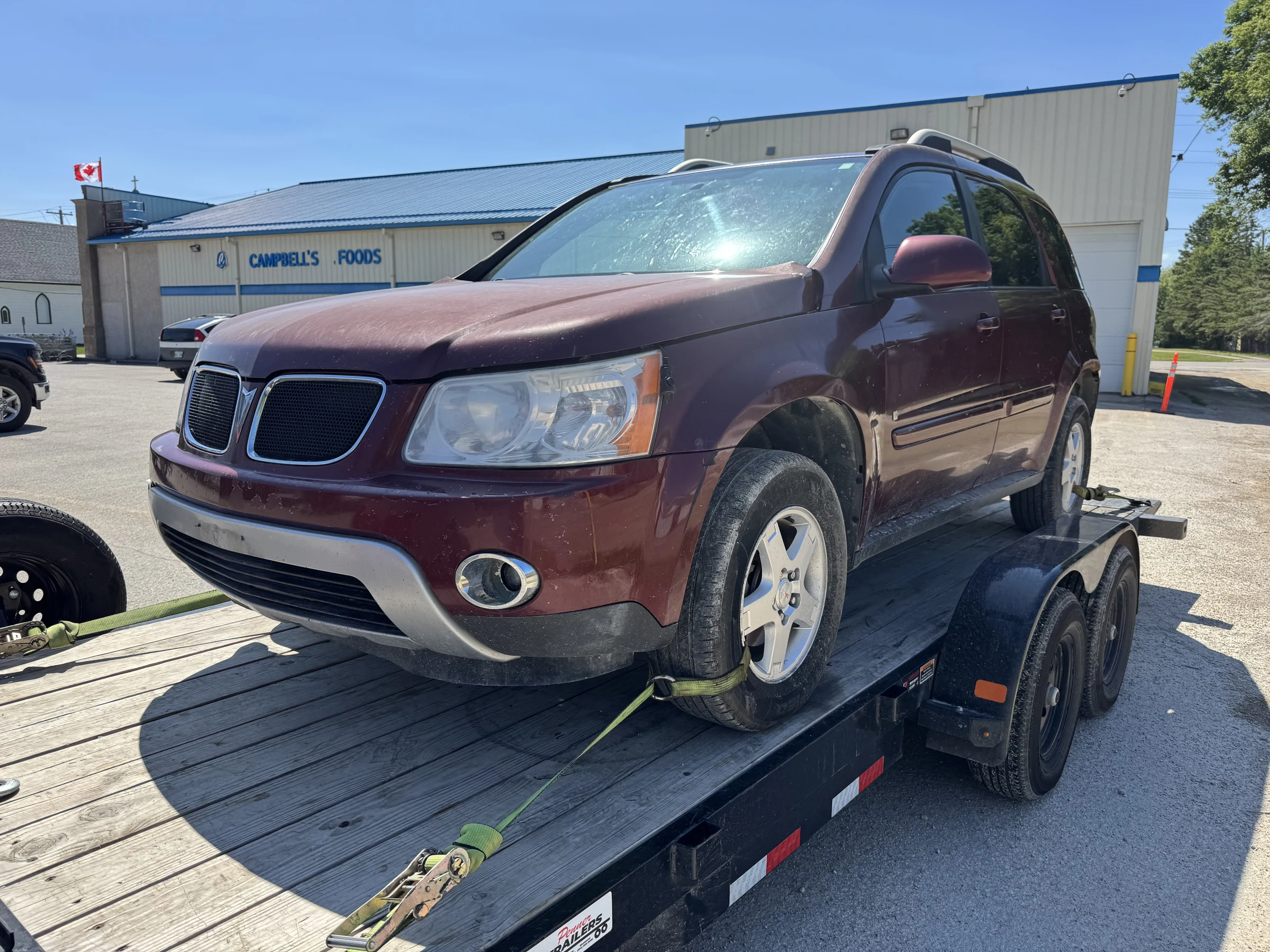
If a catalytic converter has been stolen from your vehicle, the car may still have value in the scrap vehicle market. The final assessment depends on the vehicle, its condition, what parts are missing, access to the property and whether the vehicle can be loaded safely. Twin Rivers Auto Recycling buys end-of-life vehicles across Niverville and southern Manitoba, including vehicles that do not run or no longer have keys.
A missing converter can change how a vehicle is assessed, but it does not automatically mean the vehicle is worthless. Before arranging removal, document the damage, confirm your ownership details and ask for an assessment based on the vehicle as it sits.
Why catalytic converters are targeted
Catalytic converters are part of a vehicle’s exhaust system. Some contain small amounts of valuable metals, which is one reason thieves target them for quick resale. Removing one can also leave a vehicle noisy, damaged underneath and unsafe or unsuitable to drive until it is repaired.
The theft itself is not the same as legitimate vehicle recycling. A scrap vehicle buyer should be dealing with the complete ownership situation and the vehicle being sold, not simply buying a loose component with an unclear history. If your converter was stolen, keep photographs of the damage and any police or insurance information connected with the incident.
How a missing converter can affect a scrap vehicle assessment
There is no single deduction that applies to every vehicle. A recycler may consider several details together:
- The vehicle’s overall condition: Body condition, rust, engine condition and the state of other major components can all matter.
- What else is missing: A vehicle with only the converter removed is different from one that has also lost wheels, batteries, panels or other valuable parts.
- Whether it can be accessed: A vehicle in a driveway is handled differently from one that is buried in a yard, stuck in mud or blocked by other equipment.
- Loading requirements: If the vehicle does not roll, has seized components or cannot be steered, the loading plan may need to change.
- Ownership documentation: Missing paperwork is often the reason an old vehicle sits unused. Ask about the situation rather than assuming it cannot be handled.
The important point is that a stolen converter should be disclosed when you request a quote. Clear information helps the TRA team understand what is on site and avoid surprises when the vehicle is inspected or loaded.
What to do after a catalytic converter theft
- Do not drive the vehicle unless it is safe and roadworthy. The exhaust may be open, and other parts underneath may have been damaged during removal.
- Take photographs. Photograph the vehicle from several angles and the area where the converter was removed.
- Report the theft through the appropriate channels. Keep any reference information for your records and insurance conversation.
- Check the vehicle’s future use. If the vehicle is otherwise sound, repair may make sense. If it is old, heavily rusted, non-running or already scheduled for disposal, recycling may be the more practical option.
- Prepare basic details for a buyer. Have the make, model, approximate year, location, ownership information and a description of missing parts available.
Do not crawl under an unsupported vehicle to inspect the damage. If the vehicle needs to be moved, leave room around it and tell the buyer about soft ground, narrow access, gates or other obstacles.
Can a vehicle without a converter still be recycled?
Often, yes. Twin Rivers Auto Recycling handles vehicles that are seized, blown, rusted to the frame, missing keys or unable to roll. A missing catalytic converter is one part of the vehicle’s condition, rather than an automatic reason to abandon the vehicle.
That does not mean every vehicle will receive the same assessment. The TRA team needs an honest description of the vehicle and its location. A complete vehicle with a stolen converter may be assessed differently from a stripped shell, but both should be discussed directly rather than guessed from a general scrap price.
Free pickup is available on most vehicles. Pickup arrangements depend on the vehicle’s condition, property access and the current route. Tell the team whether the vehicle is on pavement, in a yard, in a field or behind another vehicle. For non-running vehicles, explain whether it rolls, steers and has usable wheels.
What information helps a scrap vehicle buyer?
A few accurate details can make the first conversation more useful:
- Vehicle make, model and approximate year
- Whether the vehicle runs, rolls or steers
- Whether keys are available
- Which parts are missing, including the catalytic converter
- Whether ownership paperwork is available
- The pickup location and nearest community
- Photos showing the vehicle, driveway and access area
Twin Rivers Auto Recycling also works with fleet and commercial clear-outs, farm equipment and vehicles that have been sitting for years. If several vehicles or machines are on one property, describe the whole site so the TRA team can understand the job rather than treating each item in isolation.
Local pickup across southern Manitoba
Twin Rivers Auto Recycling is based in Niverville and serves communities including Steinbach, Île-des-Chênes, St. Adolphe, Landmark, Winnipeg, Morris, Oakbank, Selkirk, Morden, Winkler, La Salle, Stonewall, Beausejour, Ste. Agathe, Lowe Farm, Headingley, St. Malo, La Broquerie, St-Pierre-Jolys, Lac du Bonnet and Portage la Prairie.
If a converter was stolen and the vehicle is no longer worth repairing, contact Twin Rivers Auto Recycling at 431-444-CARS (2277). Explain the vehicle’s condition, what is missing and where it is located. The TRA team can then discuss whether the vehicle is a fit for pickup and recycling.